Through the Word: Bible Guide
4.92.23KReviews
Analysis ByAppCompare
I approached Through the Word: Bible Guide as a practical Bible-reading companion rather than another app to open once and forget. Its focus is simple: it pairs Bible reading with spoken teaching, organized chapter by chapter, so the experience feels closer to having a guided study session than silently moving through pages. That makes it especially appealing when I want structure, context, and a reason to keep going.
Developed by Through the Word Inc., this free Books & Reference app is aimed at everyday readers, small groups, and anyone who finds a traditional reading plan difficult to maintain. It is available for Everyone and runs on Android devices using version 7.0 or later. The current release is 5.1.2, and the app has grown to over one million installs, with a 4.9 average from around 6,300 ratings. Those figures suggest a strong reception, but my own impression is more specific: its value comes from turning Bible reading into a repeatable listening-and-reading habit.
How the everyday reading workflow feels
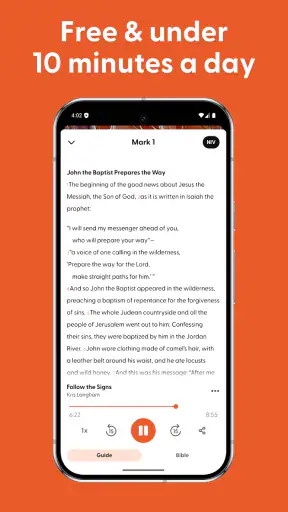
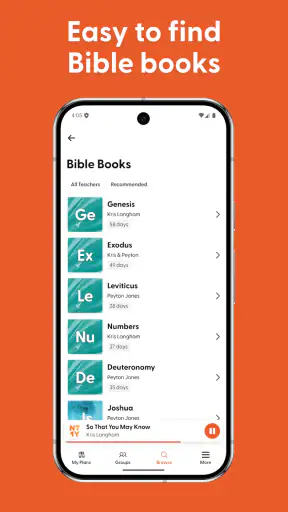
The most natural way to use the app is to begin with a chapter, start the audio study, and follow along with the Bible text. I found this less intimidating than opening a large reference Bible with no clear starting point. The chapter-by-chapter approach gives each session a defined shape, which is useful when I have only a short period available in the morning or evening.
The audio element is the main reason to choose this app over a basic Bible reader. Instead of treating commentary as something I have to search for separately, the study experience places explanation alongside the reading routine. I can listen while commuting, walking, cooking, or doing simple household tasks, then return to the text when I have more attention. That flexibility is more meaningful than it may sound because it removes the idea that Bible study must always happen at a desk.
A realistic routine would be to listen to a chapter during a morning walk, then reread the same passage later with the app open. On the first pass, the audio helps establish the setting and main ideas. On the second, I can slow down and notice wording or details that passed too quickly. This two-pass method is one of the strongest ways to use the app: audio for orientation, text for reflection.
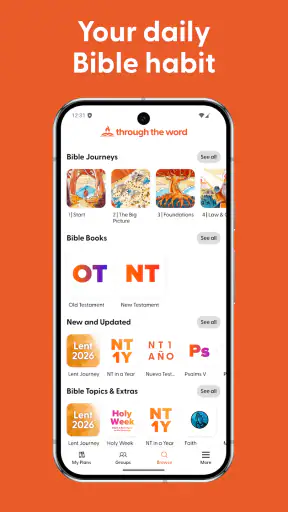
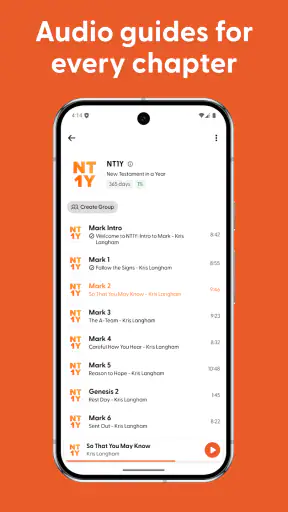
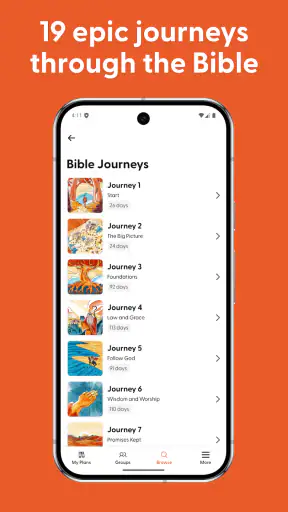
The reading-plan approach also helps with consistency. Rather than choosing a random passage every time, I can follow a sequence and know what comes next. That removes a small but surprisingly common obstacle: spending more time deciding what to read than actually reading. For someone returning to Scripture after a long break, the guided progression feels welcoming without requiring advanced knowledge.
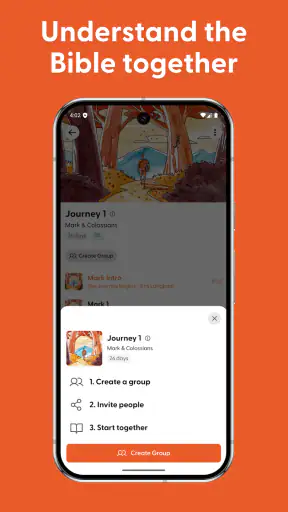
Group use adds another practical angle. A shared plan can give a family, study circle, or church group a common passage to discuss. The app does not replace conversation, interpretation, or pastoral guidance, but it can provide a common starting point. I would use it before a group meeting to become familiar with the chapter, then bring questions rather than expecting the app to settle every difficult issue.
What I would check before settling into a routine
The first settings worth checking are the ones that affect how comfortably you listen and read. Audio study is central here, so I would test the playback experience in the environment where I expect to use it most. A quiet room, a bus, and a walk outdoors create very different listening conditions. If the volume or pace does not suit the situation, the whole routine becomes harder to maintain.
I would also check the reading-plan selection before starting seriously. The best plan is not necessarily the most ambitious one. A shorter, consistent session is more useful than choosing a demanding sequence and abandoning it after a few days. Through the Word works best when I treat the plan as a framework, not a test of willpower.
Another useful habit is to decide in advance whether the session will be audio-first or text-first. When I am distracted, I prefer listening before reading because the explanation gives me a mental outline. When I am studying carefully, I reverse the order and read the chapter first, using the audio study afterward to examine what I may have missed. Making that choice deliberately prevents the app from becoming background noise.
Notifications and reminders deserve a similar review if the device offers them through the normal app experience. I would keep only the prompts that support a realistic habit. Too many reminders can make devotional reading feel like a task manager, while no reminder at all may allow the plan to disappear among other apps. The right balance depends on whether I need encouragement or quiet.
For group use, I would agree on one simple routine before inviting others: which chapter to complete, when to finish it, and what kind of discussion to have afterward. Without that agreement, a shared plan can become another unread message stream. The application can organize the material, but the group still needs a human rhythm.
It is also worth checking the device itself. Long listening sessions can affect battery use, and mobile audio is more dependable when the phone has enough charge and a stable connection. I would prepare the session before leaving home rather than assuming every location will be equally convenient. That is not a criticism unique to this app; it is simply part of using an audio-centered study tool on a phone.
Faster patterns that still preserve attention
The quickest useful pattern is not to rush through chapters. It is to remove unnecessary decisions. I like choosing the next session immediately after finishing the current one, keeping the plan visible, and using the same time of day whenever possible. Repetition makes the app feel less like a destination I must remember and more like an established part of the day.
A second pattern is to separate listening from note-taking. Trying to pause constantly can interrupt the flow of the study. I prefer completing the audio first, then returning to the text and writing down one question, one important idea, and one practical response. This keeps the session focused while still producing something I can remember later.
Short sessions are another underused advantage. The app does not need to occupy an entire free evening to be worthwhile. A chapter can be divided across two moments: listening during a routine activity and reading during a quiet break. That makes it suitable for parents, students, shift workers, and anyone whose day rarely provides a long uninterrupted block.
For experienced users, repeating a chapter can be more valuable than continually moving forward. On the first listen, I may follow the broad argument. On the second, I can pay attention to a person, repeated phrase, or change in tone. The chapter-by-chapter format makes this repeatable because I know exactly where to return instead of searching through a large library.
I also found it helpful to match the app to the type of passage. Narrative sections often work well with audio because movement and sequence are easier to follow when heard. Dense or highly structured material may deserve a slower text-based session afterward. This is an important trade-off: the app encourages a guided pace, but not every chapter benefits from identical treatment.
When sharing the experience with others, I would avoid sending a vague instruction such as “use the app this week.” A better workflow is to name the chapter, ask everyone to listen once, and bring one observation to the discussion. That turns the application into a preparation tool rather than a substitute for participation.
Where the guided format reaches its limits
The same structure that makes the app approachable may feel restrictive to readers who want a highly customizable research environment. This is not a full replacement for a dedicated study Bible, academic commentary collection, or specialist Bible software. If I need extensive cross-references, original-language tools, detailed maps, or a broad collection of scholarly resources, I would use another category of product alongside it.
It is also not the ideal choice for someone who wants only a plain, distraction-free text reader. The audio study is the point of the experience, so readers who prefer complete silence and total control over their own interpretation may find the guided approach unnecessary. A simple Bible app can be better when the goal is quick lookup, searching, or comparing passages.
Audio can introduce its own limitations. Listening is convenient, but it is easier to miss a detail than when reading slowly. I would not rely on a single passive listen for a difficult passage. The strongest approach is to use audio as an entry point and return to the written chapter when the subject deserves careful attention.
New users should also resist treating the plan as a race. Moving chapter by chapter can create the impression that progress matters more than understanding. If a section raises questions, pausing to reread it is a better use of the app than advancing simply to maintain momentum. The structure should serve reflection, not pressure.
There is another subtle limitation for group settings: people may enter with different expectations. One participant might want devotional encouragement, another historical background, and another close textual analysis. Through the Word can give everyone the same material, but it cannot make those goals identical. A group leader should set expectations before relying on it as the center of a meeting.
Because the app is free, it is easy to recommend as a low-risk starting point. Still, free access does not mean it will suit every reading style. Someone who already has a carefully organized study system may gain more from a specialized reference tool. Someone who struggles mainly with consistency, context, or finding a manageable starting point is more likely to notice an immediate benefit here.
Who should make it part of a routine
I would recommend Through the Word to beginners who want guidance without feeling overwhelmed, returning readers who need a clear path back into Scripture, and listeners who absorb ideas well through spoken teaching. It is also a good fit for people who want to combine a personal reading plan with occasional group discussion.
It suits busy days particularly well. A person can listen while walking, then read the same chapter later. A student can use it to prepare for a discussion. A family can agree on a shared chapter and talk about it afterward. These are modest workflows, but they are realistic, and realistic habits usually outperform ambitious plans that are difficult to repeat.
I would be more cautious about recommending it to advanced researchers who expect a large set of technical tools in one place. I would also point plain-text readers toward a simpler Bible reader if audio teaching feels like extra material rather than help. The right choice depends less on religious background than on the kind of interaction a person wants: guided listening and reading, or independent reference work.
The app’s Everyone age rating and free price make it easy to try in a household or group without a financial commitment. I still think adults should decide how much guidance is appropriate for younger readers, especially when using it as part of family study. The content can support discussion, but the conversation around it remains important.
My verdict after using its strengths deliberately
Through the Word succeeds because it gives Bible reading a repeatable shape without making the phone experience feel like a complicated research project. Its best qualities appear when I combine the audio with the text, choose a sustainable plan, and return to chapters instead of treating completion as the only goal.
The app has earned a 4.9 average across roughly 6,300 ratings, and its audience has reached more than one million installs. Those figures are encouraging, but my recommendation rests on the workflow itself: it makes starting easier, adds context to reading, and gives listening a meaningful place in a daily routine.
My strongest recommendation is to use it as a guided companion, not as your only Bible resource. Let it handle momentum and orientation, then use careful reading, personal reflection, and conversation for depth. If that combination matches what you need, this free app is an unusually approachable way to build a steady habit. If you want advanced research tools or completely independent reading, another option will serve you better.
For my own use, the winning routine is simple: follow a manageable plan, listen once, read with attention, and revisit anything that deserves more thought. That balance keeps the experience practical without making it shallow. In that role, Through the Word Inc. has created a useful Books & Reference app that feels designed for real days rather than ideal schedules.
FAQ
What is Through the Word: Bible Guide?
Through the Word: Bible Guide is a Bible study and devotional app designed to help users understand Scripture through chapter-by-chapter audio teachings. It combines Bible reading with clear explanations, practical commentary, and guided reflections, making it useful for personal study, daily devotionals, or listening while commuting. The app is intended for both newcomers and experienced readers who want additional context while exploring the Bible.
How does the Bible study experience work in the app?
After choosing a Bible book or reading plan, you can follow the relevant Scripture passage and listen to an accompanying audio guide. The commentary generally explains the chapter’s meaning, historical setting, key themes, and practical application in an accessible way. This format allows you to read and listen together, although you can also use the audio content on its own when you prefer a more convenient, hands-free study session.
Is Through the Word: Bible Guide suitable for beginners?
Yes, the app is particularly approachable for people who may find the Bible difficult to understand on their own. Its guided audio explanations help introduce unfamiliar books, events, vocabulary, and cultural background without requiring previous theological knowledge. More experienced readers can also benefit from the structured format, especially when they want a consistent devotional routine or a fresh perspective on passages they have already studied.
Does the app require an internet connection or offer offline access?
Some features may require an internet connection, particularly when streaming audio, synchronizing progress, or accessing updated content. Depending on the version and available options, selected studies or audio guides may be downloadable for offline listening. Before relying on the app during travel or in areas with limited service, check the download controls and storage requirements on your device, as offline availability can vary by content and platform.
Is Through the Word: Bible Guide free to download and use?
The app may be downloaded at no initial cost, but certain content, features, or optional resources can depend on the current subscription or in-app purchase model. Availability and pricing may differ between Android and iOS and can change over time. It is worth reviewing the store listing before installation to see which Bible guides are included for free, whether payment is recurring, and what cancellation terms apply.
Pros
- Clear
- verse-by-verse explanations make difficult passages easier to understand.
- Audio narration is useful for listening during commutes or personal study.
- Reading plans help users maintain a consistent Bible study routine.
- Search tools make it easy to find specific books
- chapters
- or topics.
- Helpful for both beginners and experienced readers seeking added context.
Cons
- Some commentary may reflect a particular theological viewpoint.
- The amount of content can feel overwhelming for casual readers.
- Audio and study materials may require an internet connection.
- Navigation between Bible text and commentary can take some practice.
- Advanced users may want more customization and cross-reference tools.